


Lawyers, doctors, accountants: here’s why a well-designed website isn’t an expense, but a business tool.
It happens often: a professional with years of experience, a solid reputation in their sector, satisfied clients — and a website that doesn’t represent them at all.
Not because they don’t care. But because no one has ever explained to them what a website for a professional should actually do, and what it should communicate to first-time visitors.
This article answers exactly that question.
The most common problem: a website that informs but doesn’t convince
Most professional websites follow a predictable pattern: a homepage with a generic tagline, an ‘about us’ page, a list of services, and contact details. The end.
It is a website that informs, but does not convince. And there is a huge difference between the two.
A potential client who lands on your website isn’t just looking for information — they can find that anywhere. They’re looking for an answer to a deeper question: can I trust this person to solve my problem?
If the site doesn’t answer this question within the first few seconds, the visitor closes the tab and moves on to the next result on Google.
The 4 key messages every professional’s website should communicate
An effective website for a professional must communicate four things, in this order:
1. ‘You’re in the right place’
The visitor must immediately understand who you are, what you do and who you do it for. Not after reading three paragraphs — straight away, at first glance.
A vague headline such as ‘Your health is our priority’ or ‘Professionals at your service’ says nothing specific. A headline such as ‘Dental practice in [city] — from your first visit to the smile you’re looking for’ is already much more effective: it guides, reassures and communicates directly.
2. ‘You’re in good hands’
Once they know where you are, visitors want to know why they should choose you over someone else.
This is where credibility factors come into play: years of experience, specialisations, awards, cases resolved, equipment used. Not to boast, but to answer a legitimate question that every client asks themselves before entrusting their business to a professional.
3. ‘I understand your problem’
This is where many websites fall short. They talk about the professional — their skills, their history, their practice — but almost never about the client and what keeps them awake at night.
A patient looking for a dentist doesn’t think, “I want a professional with 20 years’ experience”. They think “I’m afraid of needles”, or “I want to sort this out without spending a fortune”. An effective website picks up on these thoughts and addresses them, showing understanding even before proposing solutions.
4. ‘What to do next’
Every page on the site must have a clear objective and an equally clear action to take: book a visit, request a consultation, fill in a contact form.
It seems obvious, but most websites leave visitors without a clear direction. The result is that even those who were interested don’t know how to take the next step, and they leave.
A real-life case study: the dental practice that acquired 5 clients in 4 months
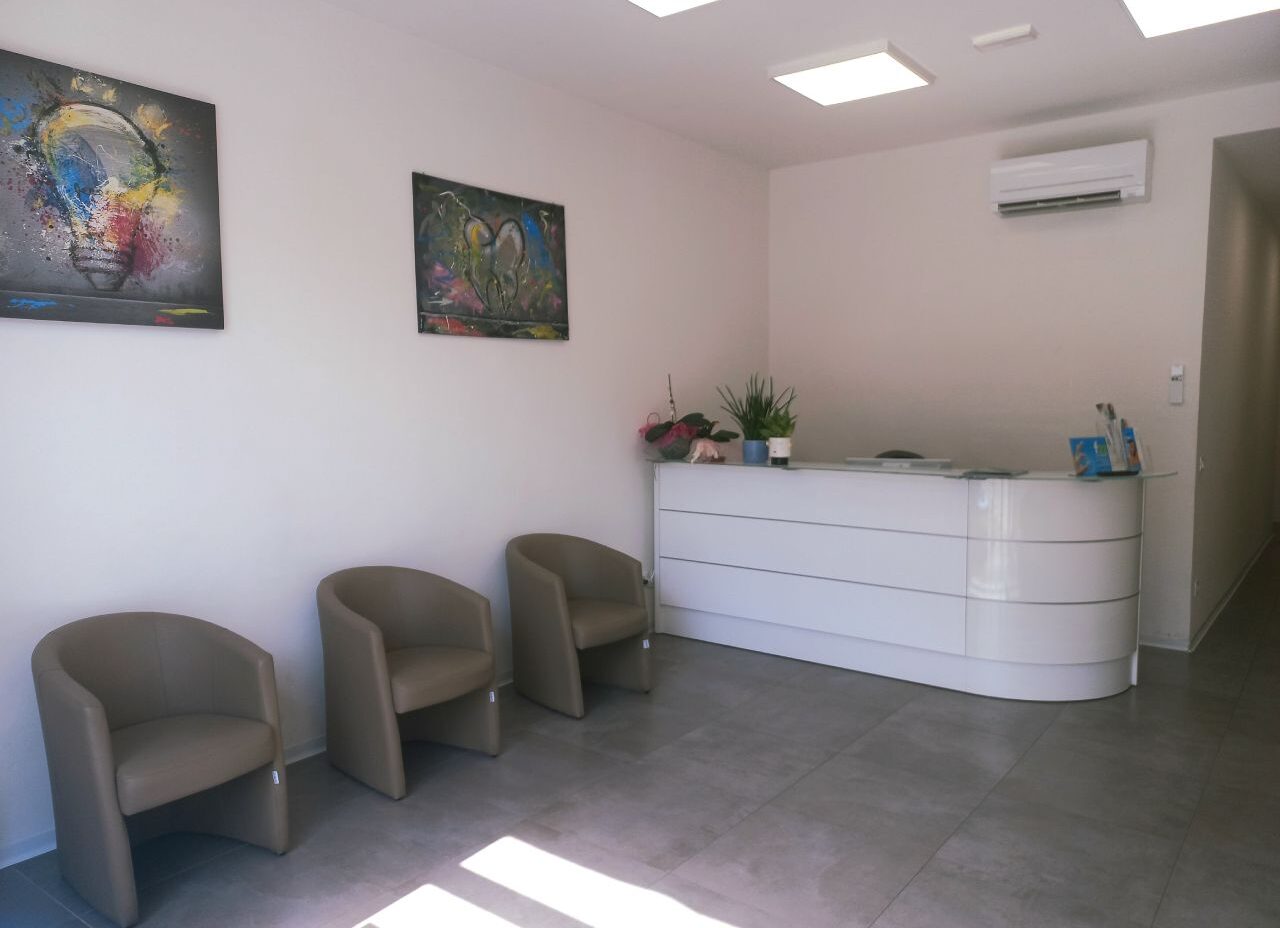
Some time ago, I worked with a dental practice that had no online presence — no website, no social media profiles, no advertising campaigns.
We were starting from scratch.
We built the website by applying exactly the principles described above: clear communication right from the homepage, patient-focused copy (not dentist-focused), a clean design that conveyed professionalism and reassurance, and a simple process for booking an appointment.
No investment in advertising. No social media activity.
Result: in 4 months, the practice received 5 new enquiries directly via the website form — patients who had searched on Google, found the site, and decided to get in touch.
Five clients acquired using a single tool, built once and active 24 hours a day.
Why design alone is not enough
It is worth clearing up a common misconception: a ‘beautiful’ website is not necessarily an effective one.
Design plays a fundamental role in conveying professionalism and trust — a visually neglected website conveys a lack of care in the professional’s work too. But a website can be graphically polished and still fail to convert any visitor into a customer if the communication is wrong.
What really makes the difference is the alignment of three elements:
- Message — what you say and how you say it
- Design — how it looks visually
- Structure — how you guide the visitor towards taking action
When these three elements work together, the site ceases to be a digital brochure and becomes an active tool for customer acquisition.
The right question to ask
If you have a website, try visiting it as if you were a customer who doesn’t know you.
Can you immediately tell what you do and for whom? Does the website make you want to get in touch? Is there anything that tells you why you should choose you over someone else?
If you have any doubts about any of these answers, there’s probably room for improvement.
If you want to understand what’s missing from your website and how to fix it, get in touch — I’ll carry out an initial free analysis and let you know what I see.
Article written by [Your name] — web designer specialising in websites for professionals.